Beyond Reading: Story Projects That Help Children Grow

When parents think about helping early readers, they often think of sitting together with a book and sounding out words. That matters, of course. Reading builds vocabulary, attention, memory, and confidence. But stories can do even more. Stories can become shared projects. They can become emotional practice.
For young children, especially early readers, book-related projects do not always have to be easy. In fact, a little challenge can be very good. When a child works through a difficult drawing, struggles to build a puppet, forgets a line in a story performance, or disagrees with a parent about how the story should end, something important is happening. The child is learning how to feel, think, adjust, and keep going. That is child development in action.
Create a “What Happened Next?” Story
After reading a book together, ask your child, “What do you think happened the next day?” Then create a short sequel together. The child can dictate while the parent writes, or the child can write a few words and draw the rest. The goal is not perfect spelling or polished storytelling. The goal is imagination, sequencing, and emotional expression. A parent might ask:
- “What problem does the character face next?”
- “How does the character feel?”
- “What helps them solve it?”
- “Does anyone help them?”
- “What do they learn?”
This kind of project helps children practice cause and effect, emotional language, planning, and empathy.
Build the Story World
Some children love to read. Others come alive when they build, draw, move, or pretend. After reading a story, invite your child to build one part of the story world using blocks, paper, clay, recycled boxes, LEGOs, or craft materials. It might be a forest, a house, a castle, a spaceship, a garden, or a tiny neighborhood.
This project supports spatial thinking, creativity, fine motor skills, and problem-solving. It can also become emotionally meaningful. If the tower falls, the bridge does not hold, or the paper tears, the child gets a chance to experience frustration and repair. That moment matters. Instead of rushing to fix it, a parent can say, “That was frustrating. Let’s take a breath and think of another way.” The project becomes more than a craft. It becomes practice in resilience.
Make a Feelings Map for the Character
Choose a character from a book and draw a simple “feelings map.” At the beginning of the story, how did the character feel? In the middle? At the hardest part? At the end? Children can use colors, faces, stickers, or words. For example, blue might mean sad, red might mean angry, yellow might mean excited, and green might mean calm. This helps children understand that feelings change. It also teaches them that characters, like real people, can feel more than one thing at the same time. A brave character can also feel scared. A happy character can also feel nervous. A frustrated character can still keep trying. For children, this is a powerful emotional lesson.
Act Out the Story with a Twist
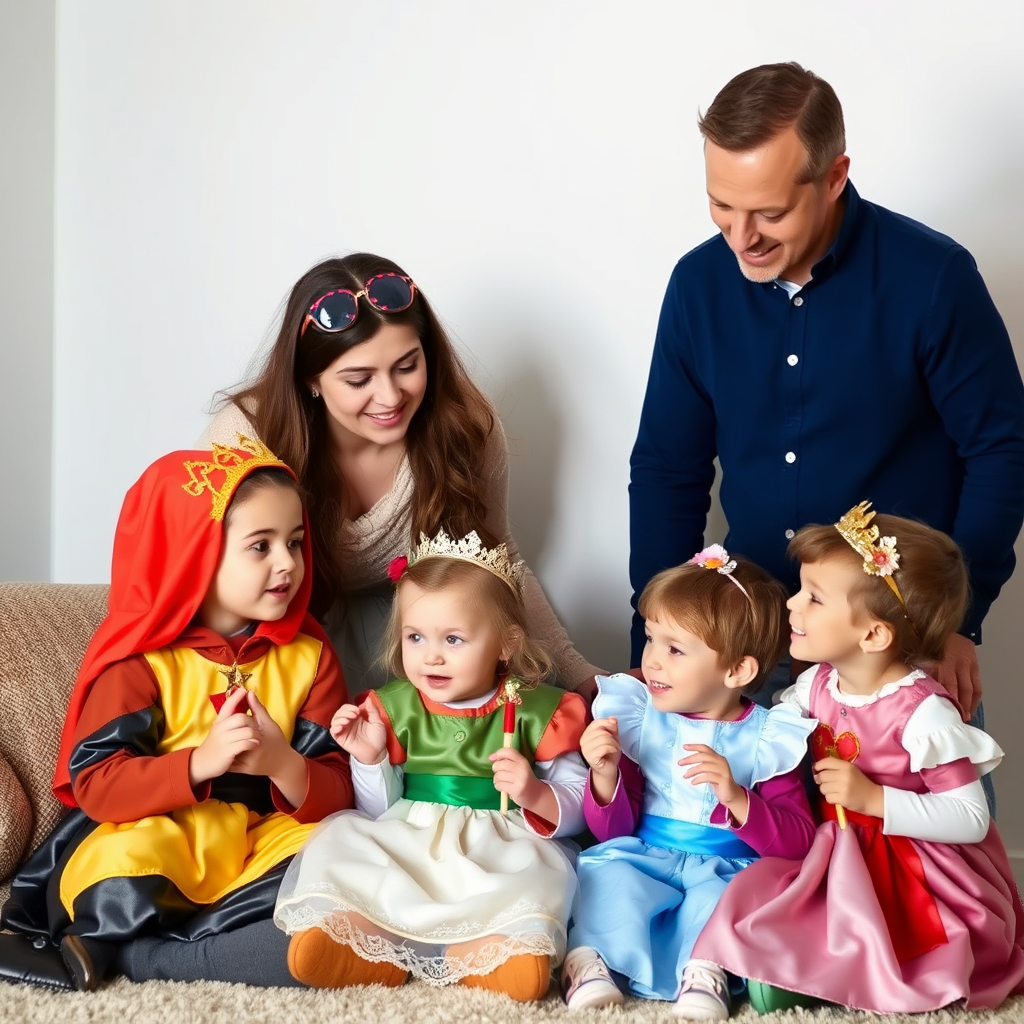
Choose a favorite scene and act it out together. Use voices, costumes, stuffed animals, or homemade puppets. Then add a twist: ask your child to change one thing.
What if the smallest character became the leader? What if the dragon was lonely instead of mean? What if the lost child helped someone else find their way? What if the ending was different?
Acting out stories helps children develop language, confidence, body awareness, perspective-taking, and flexible thinking. It can also bring up strong emotions: shyness, excitement, embarrassment, pride, or disappointment. That is part of the value. When parents and children experience emotions together in a safe, playful way, children learn that feelings are not dangerous. Feelings can be noticed, named, expressed, and managed.
Create a Family Storybook
A beautiful project is to create a simple family storybook. It does not need to be fancy. Stapled paper works. A small notebook works. A digital version works too. The story might be:
- The Day We Got Lost and Found Our Way
- When Grandma Was Little
- Our Family’s Bravest Moment
- The Time We Tried Something New
- My First Big Challenge
This type of project connects literacy with identity. Children learn that their lives are full of stories too. They begin to see themselves as characters who can struggle, learn, change, and grow. For early readers, a family storybook can include simple repeated phrases:
- “We were nervous.”
- “We tried again.”
- “We helped each other.”
- “We found a way.”
Repeated language helps children participate in reading while also reinforcing emotional and developmental themes.
Make a Problem-Solving Book
This is a wonderful project for children who are learning to handle frustration, anxiety, transitions, or conflict. Together, create a short book about a character facing a challenge. The character might be afraid to try something new, upset about losing a game, nervous about school, or frustrated when something feels too hard. The story should not magically remove the problem. Instead, let the character work through it.
A helpful structure is:
- The character wants something.
- Something gets difficult.
- The character has a feeling.
- The character tries one strategy.
- The character gets help or tries again.
- The character learns something.
- The character succeeds.
This teaches children that problems are not always solved instantly. Growth often comes through effort, support, and persistence.
Design a “Bravery Challenge” Inspired by a Story
After reading about a character who faces a challenge, invite your child to create their own small bravery challenge. It might be reading one sentence out loud, drawing something difficult, cleaning up after a project, trying a new word, asking a question, or finishing a task even when it feels boring. The key is to keep the challenge developmentally appropriate but meaningful. It should stretch the child a little without overwhelming them.
Afterward, ask:
- “What was hard?”
- “What helped?”
- “What feeling showed up?”
- “What are you proud of?”
- “What would you try next time?”
This helps children connect stories to real-life courage.
Why These Projects Matter
Children do not grow only by being comfortable. They grow by trying, feeling, adjusting, and trying again. When parents and children do story related projects together, they are doing more than building reading skills. They are building emotional intelligence, patience, creativity, confidence, flexible thinking, and connection. The project may get messy. The child may get frustrated. The story may not turn out the way anyone expected. That is okay.
Sometimes the most valuable part of the project is not the finished book, puppet, drawing, or performance. Sometimes the most valuable part is the moment when a child says, “This is hard,” and a parent says, “Yes, it is. But, together, we can accomplish anything.”
That is where development happens.
That is where stories become more than stories.